


Exploring the Intersection of Extended Reality and Karate Training Techniques
- Joseph Fanning
- May 27
- 4 min read
Karate is a martial art that demands precision, discipline, and consistent practice. Traditionally, mastering karate involves hours of physical training, repetition, and guidance from experienced instructors. Today, technology is reshaping how athletes train, and one of the most promising tools is Extended Reality (XR). XR blends virtual and real worlds to create immersive experiences that can enhance karate training in ways never imagined before.
This post explores how XR is transforming karate training, offering practical examples and insights into its benefits and challenges. Whether you are a karate practitioner, instructor, or simply curious about technology in sports, this article provides a clear view of what happens when karate meets XR.

What Is Extended Reality and How Does It Work?
Extended reality is an umbrella term that includes virtual reality (VR), augmented reality (AR), and mixed reality (MR). Each offers a different way to blend digital content with the real world:
Virtual Reality (VR) fully immerses users in a computer-generated environment, blocking out the physical world.
Augmented Reality (AR) overlays digital elements onto the real world, enhancing what you see without replacing it.
Mixed Reality (MR) combines both, allowing digital and physical objects to interact in real time.
In karate training, XR devices like headsets, smart glasses, and motion sensors track movements and provide visual or auditory feedback. This technology can simulate opponents, demonstrate techniques, or analyze form, making training more interactive and engaging.
How XR Enhances Karate Training
Real-Time Feedback and Technique Correction
One of the biggest challenges in karate is receiving immediate, accurate feedback. Traditional training relies on instructors watching and correcting students, which can be limited by class size or instructor availability.
XR systems can track a student’s movements with sensors and cameras, then compare them to ideal forms stored in the system. This allows:
Instant correction of stances, strikes, and blocks
Visual overlays showing the correct position
Audio cues guiding timing and rhythm
For example, a student practicing a punch can see a virtual outline of the correct arm path and adjust accordingly. This immediate feedback accelerates learning and reduces the risk of developing bad habits.
Simulating Realistic Sparring Scenarios
Sparring is essential for applying techniques under pressure, but it requires a partner and space. XR can simulate opponents with varying skill levels and fighting styles, allowing practitioners to:
Practice timing and distance without a physical partner
Experience different attack patterns and counters
Train safely without risk of injury
Some XR platforms use AI to adapt the virtual opponent’s behavior based on the user’s skill, creating a personalized challenge that evolves with the practitioner.

Enhancing Mental Focus and Visualization
Karate is not only physical but also mental. Visualization and focus are key to mastering kata and sparring. XR can support mental training by:
Creating immersive environments that simulate competition settings
Guiding meditation and breathing exercises through virtual coaches
Allowing practitioners to mentally rehearse moves in 3D space
This mental aspect helps build confidence and reduces anxiety before real matches or demonstrations.
Accessibility and Remote Learning
XR breaks down geographical barriers. Students without access to qualified instructors or dojos can train with virtual coaches anywhere. This is especially useful for:
Beginners learning basic techniques at home
Advanced students refining skills with expert feedback remotely
Instructors conducting virtual classes with real-time interaction
This accessibility expands karate’s reach and supports continuous learning.
Practical Examples of XR in Karate Training
Example 1: Virtual Kata Practice
Kata are choreographed sequences of movements that teach form and technique. XR applications can project a virtual instructor performing kata in front of the student. The student mirrors the movements, and the system tracks accuracy.
This method allows repeated practice without needing a live instructor and helps students learn the flow and timing of kata more effectively.
Example 2: Motion Capture and Performance Analysis
Some karate schools use motion capture suits combined with XR to record detailed movement data. This data helps:
Identify weaknesses in technique
Measure speed and power of strikes
Track progress over time with visual reports
Athletes can use this information to focus on specific areas for improvement.
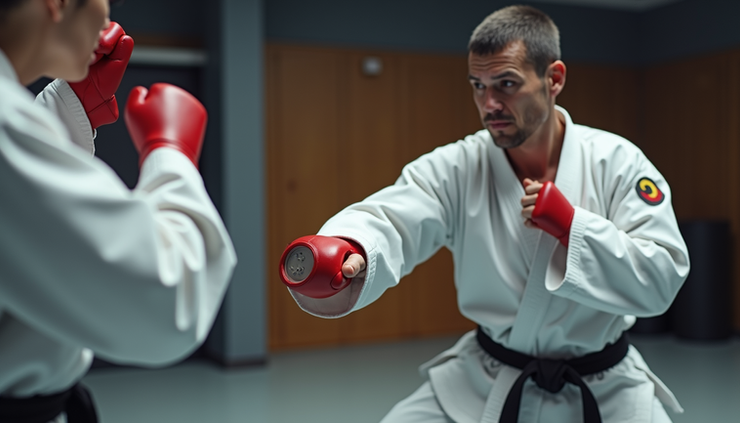
Example 3: Mixed Reality Sparring
Mixed reality setups allow a practitioner to see a holographic opponent in the real dojo. The opponent moves and attacks realistically, and the karateka responds with blocks and strikes.
This immersive experience helps develop reflexes and decision-making skills in a controlled environment.
Challenges and Considerations
While XR offers exciting possibilities, some challenges remain:
Cost and Accessibility: High-quality XR equipment can be expensive, limiting access for some schools and students.
Technical Limitations: Sensors may not always capture subtle movements accurately, affecting feedback quality.
Physical Space: Some XR training requires enough room to move safely, which may not be available everywhere.
Learning Curve: Both instructors and students need time to adapt to new technology and integrate it effectively.
Despite these challenges, ongoing improvements in XR technology and decreasing costs suggest wider adoption in the near future.
The Future of Karate Training with XR
As XR technology advances, karate training will likely become more personalized, data-driven, and immersive. Future developments may include:
Integration with wearable health monitors to track fatigue and injury risk
Social XR platforms where practitioners train together virtually worldwide
These innovations will support karate practitioners at all levels, making training more effective and enjoyable.
Comments