


Mastering Karate Stances Techniques: A Comprehensive Guide
Karate is more than just powerful strikes and fast kicks. The foundation of every effective move lies in mastering the stances. Without a solid stance, balance falters, power weakens, and technique loses precision. This guide breaks down essential karate stances techniques, explaining how each stance supports movement, defense, and attack. Whether you are a beginner or looking to refine your skills, understanding these stances will elevate your karate practice.

Why Stances Matter in Karate
Stances are the building blocks of karate. They provide stability, enable quick transitions, and help generate power. Each stance serves a specific purpose, whether it is for defense, offense, or mobility. Practicing stances improves:
Balance: Prevents falling or being easily pushed off.
Power: Transfers energy from the ground through the body.
Posture: Keeps the body aligned for efficient movement.
Endurance: Builds leg strength and stamina.
Ignoring stance training limits progress. Strong stances make techniques more effective and reduce injury risk.
Key Karate Stances and Their Techniques
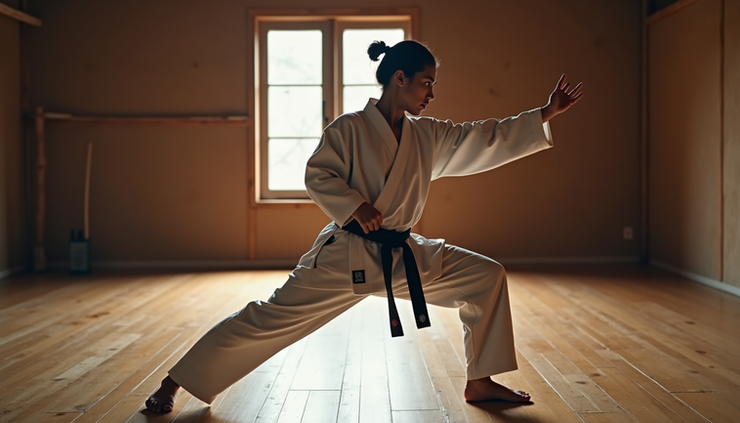
1. Zenkutsu Dachi (Front Stance)
Zenkutsu dachi is one of the most common stances in karate. It involves stepping one foot forward with the knee bent and the back leg straight. The weight distribution is roughly 60% on the front leg and 40% on the back.
How to perform:
Step forward about one and a half shoulder widths.
Bend the front knee so it aligns over the toes.
Keep the back leg straight and foot pointing slightly outward.
Distribute weight mainly on the front leg.
Keep your hips and shoulders square to the front.
Purpose and benefits:
Provides strong forward stability.
Ideal for launching punches or blocks.
Helps generate forward power.
Allows quick forward movement.
Common uses:
Executing straight punches (oi-zuki).
Performing downward blocks (gedan-barai).
Preparing for forward attacks.
2. Kokutsu Dachi (Back Stance)
Kokutsu dachi shifts most of the weight to the back leg, with the front leg lightly touching the ground. The back foot points backward, and the front foot points forward.
How to perform:
Step one shoulder width backward.
Place about 70% of your weight on the back leg.
Keep the back knee bent and the front leg straight.
The back foot points at about 45 degrees outward.
The front foot points straight ahead.
Purpose and benefits:
Provides excellent defensive posture.
Enables quick retreat or counterattack.
Keeps the body low and balanced.
Protects vital areas by shifting weight backward.
Common uses:
Defending against attacks.
Preparing for counter punches or kicks.
Maintaining balance during blocks.
3. Kiba Dachi (Horse Stance)
Kiba dachi is a wide stance with feet parallel and spread wider than shoulder-width. Both knees bend deeply, resembling sitting on a horse.
How to perform:
Spread feet about twice shoulder width apart.
Point toes straight forward.
Bend knees deeply, keeping thighs parallel to the floor.
Keep the back straight and hips level.
Distribute weight evenly on both legs.
Purpose and benefits:
Builds leg strength and endurance.
Provides a stable base for lateral movements.
Useful for side blocks and strikes.
Improves hip flexibility.
Common uses:
Side blocks (yoko-uke).
Preparing for side kicks.
Training lower body strength.
4. Neko Ashi Dachi (Cat Stance)
Neko ashi dachi is a light stance where most weight rests on the back leg, and the front foot lightly touches the ground with toes.
How to perform:
Place about 90% of your weight on the back leg.
Keep the back knee bent.
Touch the ball of the front foot lightly on the floor.
The front foot points forward or slightly inward.
Keep hips and shoulders facing forward.
Purpose and benefits:
Allows quick shifts in movement.
Ideal for evading attacks.
Enables fast kicks or punches from a light stance.
Improves balance on one leg.
Common uses:
Quick front kicks (mae-geri).
Defensive maneuvers.
Transitioning between stances.
5. Sanchin Dachi (Hourglass Stance)
Sanchin dachi is a narrow stance with feet shoulder-width apart, toes pointing slightly inward. It emphasizes tension and breathing control.
How to perform:
Stand with feet shoulder-width apart.
Point toes slightly inward.
Bend knees slightly.
Tense the muscles in legs and core.
Focus on deep, controlled breathing.
Purpose and benefits:
Builds internal strength and focus.
Develops muscle tension control.
Enhances breathing techniques.
Strengthens posture and core stability.
Common uses:
Breathing and tension training.
Foundational stance in many kata.
Strengthening muscles for strikes.
Tips for Practicing Karate Stances
Start slow: Focus on correct form before speed or power.
Use a mirror: Check alignment and posture.
Breathe naturally: Avoid holding your breath.
Engage muscles: Keep legs and core active.
Practice transitions: Move smoothly between stances.
Train regularly: Consistency builds strength and balance.
Common Mistakes to Avoid
Knees collapsing inward or extending beyond toes.
Leaning too far forward or backward.
Uneven weight distribution.
Stiff or locked joints.
Neglecting hip and shoulder alignment.
Correcting these mistakes improves effectiveness and reduces injury risk.

Applying Stances in Real Karate Practice
Stances are not static positions but dynamic foundations. In sparring or kata, you will constantly shift weight and stance to adapt to your opponent or sequence. For example:
Use zenkutsu dachi to advance and strike with power.
Shift to kokutsu dachi to defend and prepare counterattacks.
Drop into kiba dachi for strong lateral blocks.
Employ neko ashi dachi for quick evasive moves.
Practice sanchin dachi to build internal strength and focus.
Mastering these stances improves your overall karate ability, making your techniques sharper and more effective.
Comments