


Mastering the Uppercut Punch in Karate Techniques and Tips
- Joseph Fanning
- May 29
- 4 min read
The uppercut punch is a powerful and precise strike that can change the course of a karate match or self-defense situation. Unlike straight punches or hooks, the uppercut delivers force from a low angle, targeting the opponent’s chin or torso with explosive upward motion. Mastering this technique requires understanding its mechanics, timing, and proper body alignment. This post breaks down the uppercut punch in karate, offering clear guidance and practical tips to help practitioners improve their skill and effectiveness.
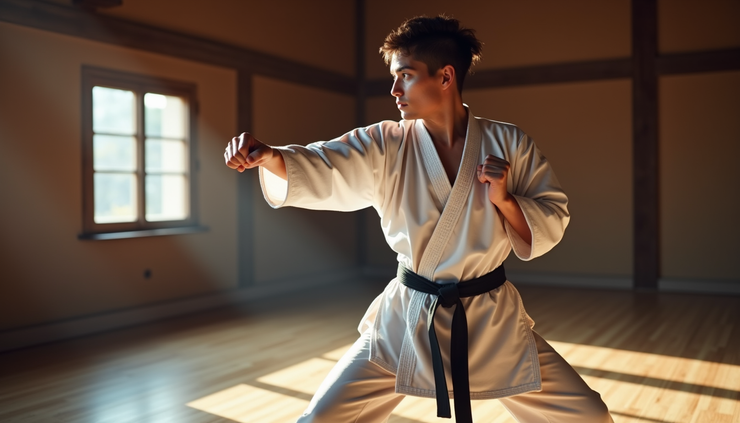
Understanding the Role of the Uppercut Punch in Karate
Karate emphasizes precision, speed, and control. The uppercut punch fits into this framework as a close-range strike that can bypass an opponent’s guard. It is especially useful when the opponent leans forward or lowers their guard, exposing the chin or ribs.
Close-range effectiveness: The uppercut works best within arm’s reach, making it ideal for counterattacks or finishing combinations.
Surprise element: Because it comes from below, it can catch opponents off guard who expect strikes from horizontal or downward angles.
Body mechanics: The punch uses the legs, hips, and core to generate upward force, not just arm strength.
In karate, the uppercut is often integrated into combinations with jabs, crosses, and hooks, creating fluid and unpredictable attacks.
Key Components of a Strong Uppercut Punch
To deliver a powerful uppercut punch, focus on these essential elements:
Stance and Balance
A solid stance provides the foundation for power and control. Most karate styles use a front stance (zenkutsu dachi) or a fighting stance with feet shoulder-width apart.
Keep your weight slightly forward on the balls of your feet.
Maintain a low center of gravity for stability.
Distribute weight evenly to allow quick movement.
Hip and Knee Drive
Power comes from the legs and hips, not just the arm. As you prepare to punch:
Slightly bend your knees.
Rotate your hips upward and forward.
Push off the ground with your rear foot to add momentum.
Arm and Fist Position
The arm should move in a tight, controlled arc:
Keep your elbow close to your body during the initial phase.
Drive your fist upward in a vertical path.
Rotate your fist so the palm faces you or slightly inward at impact.
Keep your wrist aligned to avoid injury.
Head and Shoulder Movement
Protect yourself while attacking:
Tuck your chin slightly to protect your jaw.
Use your shoulder to shield your chin as you punch.
Keep your eyes on the target.
Step-by-Step Guide to Executing the Uppercut Punch
Follow these steps to practice the uppercut punch effectively:
Start in your fighting stance with feet shoulder-width apart, knees slightly bent.
Shift your weight slightly onto your rear leg to prepare for the upward drive.
Rotate your hips and knees upward while pushing off the rear foot.
Bring your fist up in a tight arc from below, aiming for the opponent’s chin or solar plexus.
Rotate your fist so the palm faces you or slightly inward at the moment of impact.
Retract your fist quickly to guard position after the punch.
Keep your other hand up to protect your face throughout the movement.
Practicing this slowly at first helps build muscle memory and ensures proper form before increasing speed and power.
Common Mistakes to Avoid When Throwing an Uppercut Punch
Even experienced karate practitioners can fall into common pitfalls that reduce the effectiveness of the uppercut punch:
Overextending the arm: This wastes energy and leaves you off balance.
Using only arm strength: Neglecting hip and leg drive limits power.
Dropping the guard: Leaving your face open invites counterattacks.
Poor wrist alignment: This can cause injury and reduce impact.
Telegraphing the punch: Making the movement obvious gives opponents time to react.
Correcting these mistakes improves both the power and safety of your uppercut punch.

Training Drills to Improve Your Uppercut Punch
Consistent practice is key to mastering the uppercut punch. Here are some drills to incorporate into your training:
Shadowboxing with Focus on Uppercuts
Practice throwing uppercuts slowly in front of a mirror.
Focus on hip rotation, balance, and wrist alignment.
Gradually increase speed while maintaining control.
Heavy Bag Uppercut Drills
Use a heavy bag to develop power.
Aim for the lower part of the bag to simulate the opponent’s chin or ribs.
Throw combinations that include uppercuts to build flow.
Partner Pad Work
Have a partner hold focus mitts or pads at different heights.
Practice timing and accuracy by hitting the pads with uppercuts.
Work on defensive movements immediately after punching.
Plyometric Exercises
Jump squats and explosive lunges build leg strength for better hip drive.
Medicine ball throws mimic the explosive motion of the uppercut.
Integrating the Uppercut Punch into Karate Combinations
The uppercut punch becomes more effective when combined with other strikes. Here are some common combinations:
Jab, cross, uppercut: A classic three-punch combo that mixes straight punches with the upward strike.
Hook, uppercut, cross: Starts with a hook to distract, then the uppercut to break through the guard.
Uppercut, body shot, hook: Targets different levels to confuse the opponent.
Practicing these combinations improves timing and fluidity, making your attacks harder to predict.

Safety Tips When Practicing the Uppercut Punch
Safety should always be a priority during training:
Warm up thoroughly to prevent muscle strain.
Use proper protective gear during sparring.
Avoid overextending or locking your joints.
Train under the supervision of a qualified instructor.
Listen to your body and rest if you feel pain.
Final Thoughts on Mastering the Uppercut Punch
The uppercut punch is a valuable tool in karate that combines power, precision, and surprise. By focusing on proper stance, hip drive, arm mechanics, and timing, practitioners can deliver effective uppercuts that enhance their overall fighting skill. Regular practice through drills and combinations builds confidence and muscle memory. Remember, control and safety are just as important as power.


Comments