


The Philosophy and Techniques Behind Jeet Kune Do
- Joseph Fanning
- May 25
- 4 min read
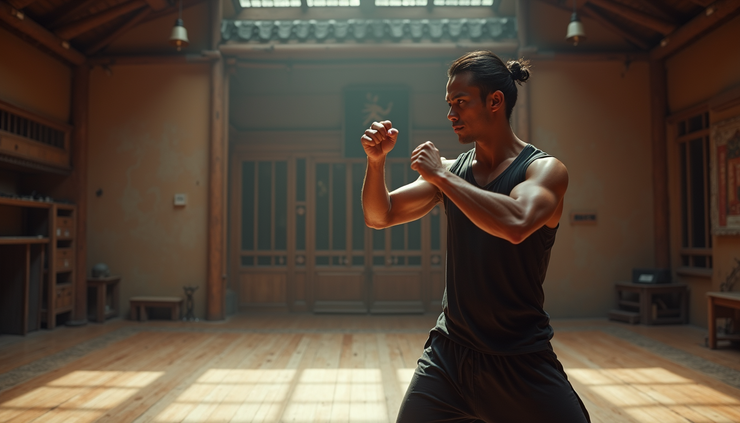
Jeet Kune Do (JKD) stands apart from traditional martial arts with its unique approach to combat and self-expression. Created by Bruce Lee, it challenges rigid styles and encourages adaptability, efficiency, and simplicity. This post explores the core philosophy and practical techniques of Jeet Kune Do, offering insights for martial artists and enthusiasts who want to understand what makes JKD distinct and effective.
The Origins of Jeet Kune Do
Jeet Kune Do means "The Way of the Intercepting Fist." Bruce Lee developed it in the late 1960s as a response to what he saw as limitations in traditional martial arts. He believed many styles were too rigid, relying on fixed patterns and forms that could fail in real combat situations. Lee wanted a system that was practical, direct, and adaptable to any situation.
JKD is not a fixed style but a philosophy that encourages practitioners to absorb what is useful, reject what is useless, and add what is uniquely their own. This approach reflects Lee’s belief that martial arts should evolve with the individual and the circumstances.
Core Philosophy of Jeet Kune Do
At the heart of JKD is the idea of simplicity and directness. Bruce Lee emphasized that the best techniques are those that achieve the goal with the least wasted movement or energy. This means avoiding flashy moves or complicated sequences that slow you down.
Key Principles
Intercepting the opponent: JKD focuses on stopping an attack before it fully develops. This is where the name "intercepting fist" comes from. The goal is to strike or control the opponent at the moment they commit to an attack.
Economy of motion: Every movement should have a purpose. Unnecessary motions are discarded to increase speed and efficiency.
Adaptability: JKD rejects fixed patterns. Instead, it encourages adapting to the opponent’s style, size, and tactics.
Non-telegraphic movement: Techniques should be executed without giving away intentions, making it harder for the opponent to react.
Personal expression: Practitioners are encouraged to develop their own style within the JKD framework, blending techniques that suit their body and mindset.
Techniques That Define Jeet Kune Do
Jeet Kune Do borrows from many martial arts, including Wing Chun, boxing, fencing, and wrestling. It combines these influences into a fluid system that can be tailored to the individual.
Striking Techniques
Straight lead punch: The signature JKD strike is a fast, straight punch aimed to intercept the opponent’s attack. It is thrown from the lead hand, minimizing telegraphing and maximizing speed.
Low kicks: JKD favors low-line kicks targeting the legs to disrupt balance and mobility rather than high kicks that are slower and easier to counter.
Trapping hands: Borrowed from Wing Chun, trapping involves controlling or immobilizing the opponent’s arms to create openings for strikes.
Footwork and Movement
Footwork in JKD is designed to maintain balance, control distance, and create angles for attack or defense. Practitioners use:
Side stepping to avoid direct attacks.
Shifting weight quickly to generate power or retreat.
Circular movements to confuse the opponent and open new lines of attack.
Defense and Counterattacks
JKD emphasizes defense that flows naturally into offense. Blocking is often replaced by parrying or redirecting attacks to conserve energy and maintain momentum. Counterattacks are launched immediately after intercepting or deflecting the opponent’s strike.
Training Methods in Jeet Kune Do
Training in JKD focuses on developing reflexes, timing, and adaptability rather than memorizing fixed forms. Some common training practices include:
Chi Sao (Sticky Hands): A sensitivity drill from Wing Chun that helps practitioners feel and react to an opponent’s movements through touch.
Sparring: Live sparring is essential to test techniques in realistic conditions and develop timing.
Shadowboxing: Practicing movements solo to improve fluidity and muscle memory.
Conditioning: Physical fitness, including strength, speed, and endurance, is crucial to execute JKD techniques effectively.

Practical Applications of Jeet Kune Do
Jeet Kune Do’s focus on efficiency and adaptability makes it suitable for real-world self-defense. Its principles help practitioners respond quickly and effectively to unpredictable situations.
Real-World Examples
Street self-defense: JKD’s emphasis on intercepting attacks and low kicks can disable an aggressor quickly, reducing the risk of prolonged confrontation.
Mixed Martial Arts (MMA): Many MMA fighters incorporate JKD concepts, especially the straight lead punch and footwork, to improve their striking and defense.
Law enforcement and military: Some tactical training programs borrow JKD principles for close-quarters combat due to its focus on quick, decisive action.
How to Start Learning Jeet Kune Do
If you want to explore JKD, look for instructors who emphasize its philosophy rather than just techniques. Since JKD is about personal expression, training should encourage you to experiment and adapt.
Tips for Beginners
Focus on basic strikes and footwork before moving to complex combinations.
Practice sensitivity drills like Chi Sao to improve reaction time.
Use sparring to test your skills in a controlled environment.
Study Bruce Lee’s writings and videos to understand the mindset behind JKD.
Keep an open mind and avoid rigidly sticking to one style or method.

The Lasting Impact of Jeet Kune Do
Jeet Kune Do remains influential because it challenges martial artists to think beyond tradition and focus on what works. Its philosophy of simplicity, directness, and personal expression continues to inspire fighters and trainers worldwide.
Comments