


Top Exercises to Boost Your Karate Performance and Skills
Karate demands more than just mastering techniques. To excel, you need strength, speed, balance, and endurance. The right exercises can sharpen these physical qualities and elevate your karate skills. This post explores effective workouts designed to improve your karate performance, helping you move faster, strike harder, and stay agile.

Building Explosive Power with Plyometric Training
Power is essential for delivering strong punches and kicks. Plyometric exercises train your muscles to generate force quickly, improving your striking impact.
Jump Squats
Stand with feet shoulder-width apart. Squat down, then explode upward into a jump. Land softly and repeat for 3 sets of 10 reps. This builds leg power for kicks and quick footwork.
Clap push-ups
Start in a push-up position. Lower your chest to the floor, then push explosively off the ground, clapping your hands before landing. Perform 3 sets of 8 reps to increase upper body strength and speed.
Bounding
Leap forward from one foot to the other, covering as much distance as possible with each bound. This improves leg strength and coordination, crucial for fast movement in karate.
These exercises train your fast-twitch muscle fibers, which are responsible for quick, powerful movements. Incorporate plyometrics twice a week to see noticeable gains in your striking force.
Enhancing Balance and Stability for Better Control
Karate requires precise control over your body, especially when executing kicks or maintaining stances. Balance exercises help you stay steady and improve your technique.
Single-Leg Stands
Stand on one leg for 30 seconds, then switch. To increase difficulty, close your eyes or stand on an unstable surface like a balance pad. This strengthens ankle and core muscles.
Bosu Ball Squats
Perform squats on a Bosu ball or balance trainer. This challenges your stability and engages your core, which supports better posture during karate moves.
Tai Chi Movements
Slow, controlled Tai Chi exercises develop body awareness and balance. Practicing these movements can improve your ability to shift weight smoothly during sparring.
Improving balance reduces the risk of injury and allows you to execute techniques with greater precision. Aim to include balance training in your routine at least three times per week.

Increasing Endurance for Sustained Performance
Karate matches and training sessions can be intense and last several minutes. Building cardiovascular endurance helps you maintain energy and focus throughout.
Interval Running
Alternate between sprinting for 30 seconds and jogging for 1 minute. Repeat for 15-20 minutes. This mimics the bursts of speed needed in karate bouts.
Jump rope
Jumping rope for 10-15 minutes improves foot speed, coordination, and cardiovascular fitness. It also enhances timing, which is vital for striking and evading.
Shadowboxing Rounds
Perform 3-minute rounds of shadowboxing with 1-minute rests. Focus on maintaining high intensity and proper form. This conditions your muscles and heart for real combat scenarios.
Endurance training should be done 3-4 times weekly to build stamina without sacrificing recovery.
Strengthening Core for Power and Stability
A strong core connects your upper and lower body, enabling efficient power transfer during strikes and kicks.
Plank Variations
Hold a plank position for 30-60 seconds. Add side planks and plank with leg lifts to target different core muscles. Complete 3 sets.
Russian Twists
Sit on the floor, lean back slightly, and twist your torso side to side while holding a weight or medicine ball. This improves rotational strength for punches.
Leg Raises
Lie on your back and lift your legs straight up, then lower slowly without touching the floor. This strengthens lower abdominal muscles important for balance.
Core exercises should be part of your training 3 times a week to support overall karate performance.
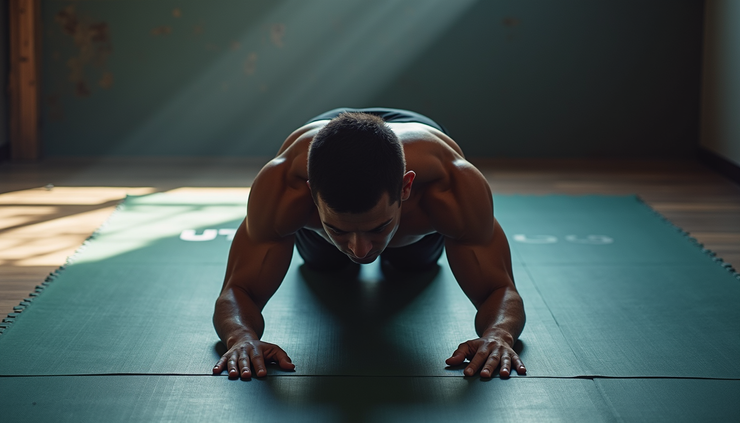
Practicing Flexibility to Prevent Injuries and Improve Technique
Flexibility allows you to perform high kicks and complex movements without strain.
Dynamic Stretching
Leg swings, hip circles, and arm swings before training prepare your muscles for action.
Static Stretching
Hold stretches like hamstring, hip flexor, and calf stretches for 30 seconds after workouts to increase range of motion.
Yoga Poses
Incorporate poses such as downward dog and pigeon pose to enhance flexibility and muscle recovery.
Flexibility training should be done daily or at least after every workout to maintain mobility.


Comments