


Understanding the Essential Moves of Pinan Basic Kata
- Joseph Fanning
- May 29
- 4 min read
Pinan kata are a fundamental part of many traditional karate styles, designed to build strong basics and prepare practitioners for more advanced techniques. The Pinan Basic Kata, often taught early in training, contains a series of moves that develop balance, coordination, and effective self-defense skills. This post breaks down the essential moves of Pinan Basic Kata, explaining their purpose and how to perform them correctly. Whether you are a beginner or an experienced martial artist looking to refine your form, understanding these moves will deepen your practice.

What Is Pinan Basic Kata?
Pinan kata, sometimes called Heian kata in certain karate styles, are a set of five forms created to teach foundational techniques. The word "Pinan" means "peaceful mind," reflecting the kata’s goal of developing calmness and control in combat. The Basic Pinan Kata introduces students to essential stances, blocks, strikes, and transitions. Each move has a practical application, often simulating defense against common attacks.
The Basic Pinan Kata typically includes:
Various stances such as front stance (zenkutsu dachi) and back stance (kokutsu dachi)
Blocks including rising block (age uke), middle block (uchi uke), and downward block (gedan barai)
Strikes like punches (tsuki) and knife-hand strikes (shuto uchi)
Footwork and turning techniques to maintain balance and positioning
Mastering these moves builds a solid foundation for more complex kata and sparring.
Key Stances in Pinan Basic Kata
Stances provide stability and power in karate. The Pinan Basic Kata uses several important stances:
Front Stance (Zenkutsu Dachi)
The front stance is a long, forward stance with the front leg bent and the back leg straight. It offers strong forward power and balance.
Feet are about shoulder-width apart, with the front foot pointing straight ahead.
The back foot points slightly outward.
Weight distribution is roughly 60% on the front leg and 40% on the back.
This stance is used for powerful punches and blocks.
Back Stance (Kokutsu Dachi)
The back stance shifts weight mostly to the rear leg, allowing quick defensive movements.
The rear leg carries about 70% of the weight.
The front foot points forward or slightly inward.
The rear foot points outward at about 90 degrees.
This stance is useful for blocking and counterattacking.
Horse Stance (Kiba Dachi)
Though less common in Pinan Basic Kata, the horse stance appears in some variations.
Feet are wider than shoulder-width, parallel to each other.
Knees are bent deeply.
Weight is evenly distributed.
This stance builds leg strength and stability.
Understanding and practicing these stances helps maintain balance and generate power during the kata.
Fundamental Blocks in Pinan Basic Kata
Blocks protect the body from attacks and set up counterattacks. The kata includes several basic blocks:
Rising Block (Age Uke)
Used to defend against overhead strikes.
The forearm rises diagonally across the body.
The elbow stays bent, and the wrist is firm.
The block redirects the attack away from the head.
Middle Block (Uchi Uke)
Defends against punches or strikes aimed at the torso.
The forearm moves across the body from outside to inside.
The elbow is bent at about 90 degrees.
The block stops or deflects the incoming strike.
Downward Block (Gedan Barai)
Protects the lower body from kicks or strikes.
The arm sweeps downward and outward.
The wrist is firm, and the elbow is slightly bent.
This block clears attacks aimed at the legs or midsection.
Practicing these blocks with proper form ensures effective defense during sparring or self-defense situations.

Strikes and Hand Techniques
Pinan Basic Kata incorporates several strikes that build hand speed and accuracy.
Straight Punch (Choku Tsuki)
Delivered from the front stance.
The fist extends straight forward with the palm facing down.
The punch targets the opponent’s centerline.
The non-punching hand retracts to the hip for balance.
Knife-Hand Strike (Shuto Uchi)
The hand is open with fingers extended and held tightly together.
The strike uses the edge of the hand.
It targets vulnerable areas like the neck or temple.
This strike requires precision and speed.
Back Fist Strike (Uraken Uchi)
The back of the fist strikes the target.
Delivered with a snapping motion.
Often used in quick counterattacks.
Requires good wrist control to avoid injury.
These strikes, combined with blocks and stances, create a balanced kata that trains both offense and defense.
Footwork and Transitions
Smooth footwork allows seamless movement between stances and techniques. The Pinan Basic Kata emphasizes:
Shifting weight correctly to maintain balance.
Pivoting on the ball of the foot during turns.
Stepping forward and backward with control.
Maintaining a low center of gravity for stability.
For example, when transitioning from a front stance to a back stance, the practitioner shifts weight to the rear leg while turning the hips and shoulders. This movement prepares for the next block or strike.
Practical Applications of Pinan Basic Kata Moves
Each move in the kata has a real-world application. Here are some examples:
Rising block can stop a downward knife attack or a punch aimed at the head.
Middle block deflects a straight punch to the torso.
Downward block clears a low kick or sweep.
Straight punch targets the opponent’s solar plexus or chin.
Knife-hand strike can incapacitate an attacker by targeting the neck or collarbone.
Understanding these applications helps practitioners see the kata as more than just a sequence of moves. It becomes a practical self-defense tool.
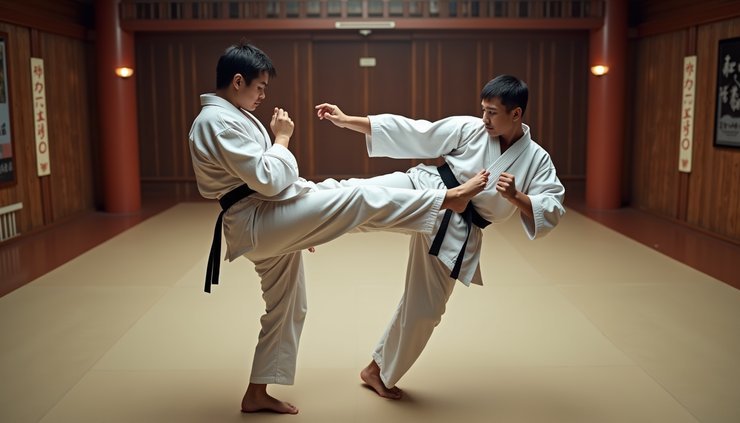
Tips for Practicing Pinan Basic Kata Moves
Focus on form: Precision is more important than speed. Practice slowly to perfect each move.
Use a mirror: Watching yourself helps identify mistakes in stance or technique.
Breathe properly: Coordinate breathing with movements to maintain energy and focus.
Visualize an opponent: Imagine attacks and defenses to make the kata more realistic.
Repeat regularly: Consistent practice builds muscle memory and confidence.
By following these tips, you will improve your kata performance and overall karate skills.
Comments